


Choosing the best sunscreen for acne-prone skin is essential to protect your skin from sun damage while preventing breakouts. Look for non-comedogenic, oil-free, and fragrance-free formulas that offer SPF 30 or higher.
Best Sunscreens for Acne-Prone Skin
When you have acne-prone skin, finding the right sunscreen can be a challenge. The wrong formula can cause breakouts, clog pores, or even make acne scars worse. But don’t worry protecting your skin from harmful UV rays while managing acne doesn’t have to be complicated. In 2026, there are several excellent sunscreens designed specifically for acne-prone skin. These sunscreens are non-comedogenic, oil-free, and formulated to keep your skin safe without triggering acne flare-ups.
In this guide, we’ll review the best sunscreens for acne-prone skin, including recommendations from dermatologists, key ingredients to look for, and expert tips to keep your skin protected and clear.
Why Sunscreen Is Essential for Acne-Scars ?
Acne-prone skin is often sensitive and inflamed, so protecting it from the sun is crucial. Sun exposure can worsen acne in several ways:
- Inflammation: UV rays increase skin inflammation, which can lead to more breakouts.
- Hyperpigmentation: Acne scars are often made worse by sun exposure, resulting in dark spots that are harder to treat.
- Skin Aging: Sun exposure accelerates skin aging, which can increase the risk of scarring and uneven skin texture.
Choosing the right sunscreen helps prevent these issues while keeping your skin safe and healthy. In fact, consistent sunscreen use can help your acne treatment work more effectively by preventing sun-induced inflammation and pigmentation.
What to Look for in a Sunscreen for Acne-Prone Skin ?
When shopping for sunscreen, it’s essential to choose one that works well for your specific skin type. Here’s what to look for in sunscreen formulas for acne-prone skin:
1. Non-Comedogenic Ingredients
The term “non-comedogenic” means that the product is specifically formulated to not clog pores. For acne-prone skin, it’s essential to choose sunscreens that won’t exacerbate acne. Look for these key ingredients:
- Zinc Oxide: A mineral sunscreen that’s gentle on the skin and offers broad-spectrum protection without clogging pores.
- Niacinamide: Known for its anti-inflammatory and skin-soothing properties, niacinamide can help calm irritated skin and reduce acne flare-ups.
- Salicylic Acid: A beta hydroxy acid (BHA) that penetrates pores, exfoliates, and helps prevent future breakouts.
2. Oil-Free & Lightweight Formula
An oil-free sunscreen will be less likely to exacerbate oily skin or clog pores, which are common triggers for acne. Look for matte formulas or lightweight, gel-based sunscreens that won’t leave a greasy residue.
3. SPF 30 or Higher
Sunscreens with SPF 30 or higher offer optimal protection from harmful UVA and UVB rays. These rays can worsen acne and increase the risk of scarring. Ensure you’re using a sunscreen that provides broad-spectrum protection.
4. Fragrance-Free & Hypoallergenic
Fragrance in sunscreen can irritate sensitive, acne-prone skin. Opt for fragrance-free and hypoallergenic sunscreens to minimize the risk of inflammation or skin reactions.
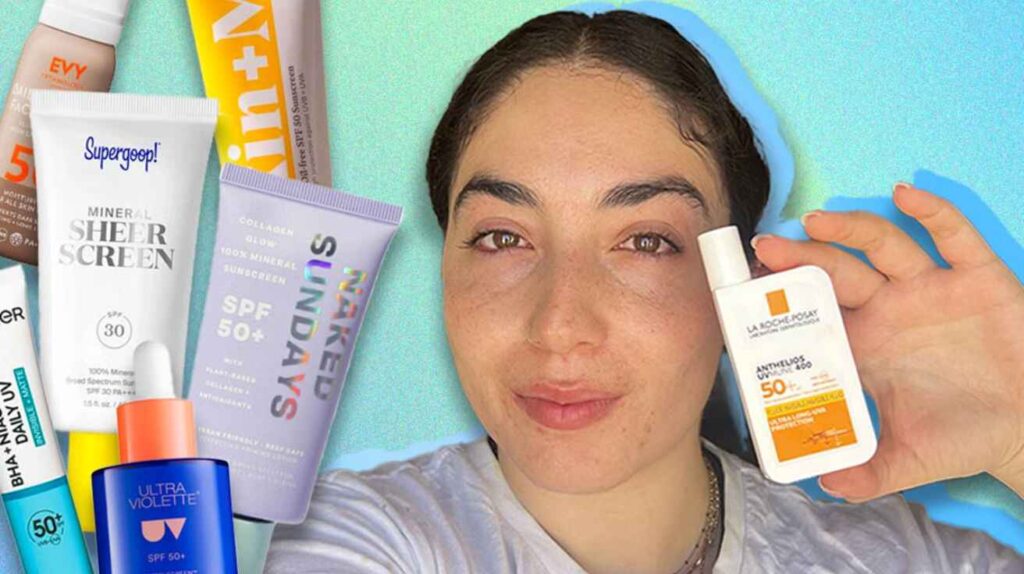
Top 10 Sunscreens for Acne-Prone Skin
1. EltaMD UV Clear Broad-Spectrum SPF 46
- Best for: Sensitive, acne-prone skin
- Key Ingredients: Niacinamide, hyaluronic acid, and zinc oxide
- Why It’s Great for Acne-Prone Skin: EltaMD’s UV Clear is lightweight, non-comedogenic, and provides broad-spectrum protection without irritating acne-prone skin. Its formulation includes niacinamide, which soothes inflammation and helps reduce redness, making it perfect for sensitive and acne-prone skin.
2. Neutrogena Clear Face SPF 55
- Best for: Oily, acne-prone skin
- Key Ingredients: Helioplex technology, oil-free formula
- Why It’s Great for Acne-Prone Skin: Neutrogena’s Clear Face sunscreen is oil-free and designed to protect against sunburn while preventing breakouts. Its formula is non-comedogenic, making it ideal for daily wear without clogging pores.
3. Supergoop! Unseen Sunscreen SPF 40
- Best for: All skin types, including acne-prone skin
- Key Ingredients: Red algae, sunflower extract, and iris root extract
- Why It’s Great for Acne-Prone Skin: The Unseen Sunscreen from Supergoop! is a transparent, weightless sunscreen that works well under makeup. It provides a smooth, non-greasy finish and is free from oils, making it suitable for acne-prone skin.
4. La Roche-Posay Anthelios Clear Skin SPF 60
- Best for: Oily, acne-prone skin
- Key Ingredients: Cell-Ox Shield technology, silica
- Why It’s Great for Acne-Prone Skin: This high-SPF sunscreen from La Roche-Posay is designed for oily skin. It provides superior sun protection while absorbing excess oil and preventing breakouts. Its non-comedogenic formula makes it a top choice for acne-prone skin.
5. CeraVe Hydrating Mineral Sunscreen SPF 30
- Best for: Dry, acne-prone skin
- Key Ingredients: Zinc oxide, ceramides, niacinamide
- Why It’s Great for Acne-Prone Skin: CeraVe’s Hydrating Mineral Sunscreen is ideal for dry, acne-prone skin. The formula hydrates and strengthens the skin’s natural barrier with ceramides and niacinamide while offering broad-spectrum protection. It’s gentle enough for sensitive skin.
6. EltaMD UV Physical Broad-Spectrum SPF 41
- Best for: Sensitive skin with acne
- Key Ingredients: Zinc oxide, titanium dioxide
- Why It’s Great for Acne-Prone Skin: A mineral sunscreen that’s ideal for sensitive, acne-prone skin. EltaMD UV Physical offers a non-greasy finish and effective protection without irritating acne or clogging pores.
7. Paula’s Choice RESIST Super-Light Daily Wrinkle Defense SPF 30
- Best for: Acne-prone skin with early signs of aging
- Key Ingredients: Zinc oxide, antioxidants
- Why It’s Great for Acne-Prone Skin: This sunscreen combines broad-spectrum sun protection with anti-aging benefits, making it perfect for those with acne who also want to address fine lines or early signs of aging. Its light texture doesn’t clog pores, and it leaves a matte finish.
8. Bioderma Photoderm AKN Mat SPF 30
- Best for: Oily, acne-prone skin
- Key Ingredients: Fluidactiv™ complex, UVA/UVB filters
- Why It’s Great for Acne-Prone Skin: This sunscreen is specifically formulated to reduce the risk of acne breakouts by regulating sebum production. It provides strong sun protection and leaves a matte finish, which is ideal for oily, acne-prone skin.
9. Tatcha Silken Pore Perfecting Sunscreen SPF 35
- Best for: Combination skin
- Key Ingredients: Japanese wild rose, silk extract
- Why It’s Great for Acne-Prone Skin: Tatcha’s sunscreen is rich in antioxidants and provides a smooth, silky finish without clogging pores. It’s perfect for combination skin, offering hydration while controlling oil.
10. BareMinerals Complexion Rescue Defense SPF 30
- Best for: Sensitive skin with acne
- Key Ingredients: Mineral-based sunscreen, antioxidants
- Why It’s Great for Acne-Prone Skin: BareMinerals’ Complexion Rescue provides SPF protection and antioxidant benefits, making it ideal for those with acne and sensitive skin. Its lightweight formula provides a natural, dewy finish without irritating the skin.
Expert Dermatologist Insights: Why Sunscreen Is Crucial for Acne-Prone Skin
According to Dr. Emily Johnson, a board-certified dermatologist, “Acne-prone skin is particularly susceptible to damage from UV exposure, which can worsen inflammation, increase the likelihood of scarring, and delay the healing process. That’s why it’s essential to choose a sunscreen that is both protective and non-comedogenic.”
Dr. Johnson emphasizes that sunscreen should be worn every day, even on cloudy days, to protect against harmful UV rays. She also recommends products that contain niacinamide, a gentle ingredient that not only soothes the skin but also helps to reduce acne-related redness and irritation.
How Sunscreen Helps Prevent Acne and Promote Healing
While sunscreen is primarily used to prevent sunburn, it also plays a crucial role in managing acne. Here’s how:
- Prevents Hyperpigmentation: UV exposure can darken acne scars (post-inflammatory hyperpigmentation), making them harder to treat. Sunscreen helps reduce this risk.
- Reduces Inflammation: Sunscreen protects the skin from inflammation caused by UV exposure, which can trigger acne flare-ups.
- Supports Acne Treatment: When combined with acne treatments like topical retinoids or salicylic acid, sunscreen protects the skin while allowing acne medications to work more effectively without being compromised by sun damage.
FAQs
Does sunscreen cause acne?
No, sunscreens designed for acne-prone skin are non-comedogenic and formulated to prevent breakouts. Choose oil-free, lightweight, and fragrance-free options.
Can sunscreen make acne worse?
Certain sunscreens with comedogenic ingredients or oils may exacerbate acne. It’s essential to choose products labeled as non-comedogenic to avoid clogging pores.
Should I wear sunscreen if I use acne medication?
Yes, sunscreen is especially important when using acne medications like retinoids or benzoyl peroxide, as these can increase your skin’s sensitivity to the sun.