

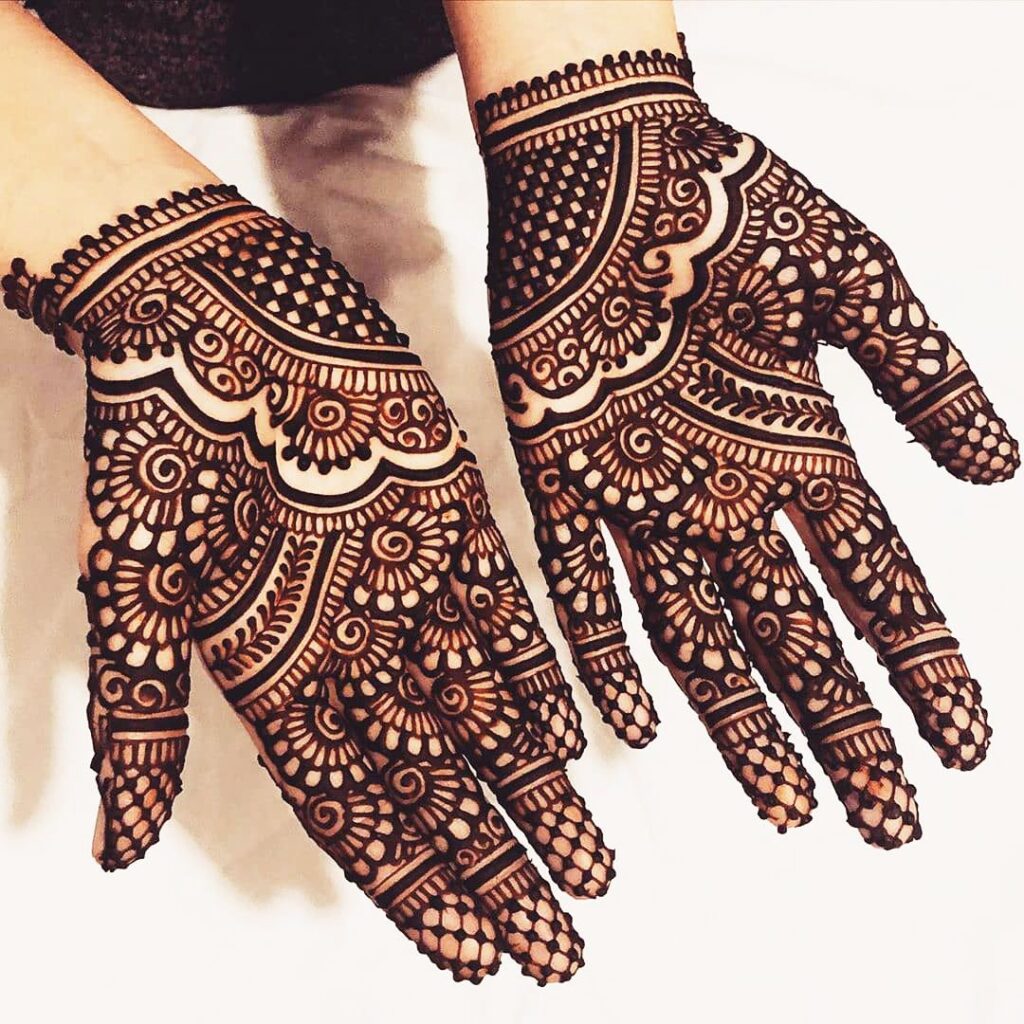
The most popular mehndi designs for hands include Arabic floral patterns on the back of the hand, mandala-style full hand designs for brides, and simple vine patterns along the fingers for casual occasions. The design choice depends on the occasion — bridal mehndi covers both palms and arms, while Eid designs are simpler and cover just the back hand.
Mehndi has always been more than just body art. It’s a tradition, a way to celebrate, and a personal style statement all rolled into one. Whether you’re attending a wedding, celebrating a festival, or simply want to add some elegance to your everyday look, the right mehndi design in hand can make all the difference.
Finding the perfect design isn’t always easy, though. With so many styles out there, it’s normal to feel a bit overwhelmed. That’s exactly why we’ve put together this guide—to help you explore different mehndi styles and find one that matches your occasion and personality.
From intricate bridal art to quick everyday patterns, the right mehndi designs for hands can transform any look. Whether you want something bold or minimal, there’s a style here for every hand and every celebration.
Understanding Different Mehndi Styles
Before we jump into specific occasions, let’s talk about the main types of mehndi designs you’ll come across.
Bridal Mehndi
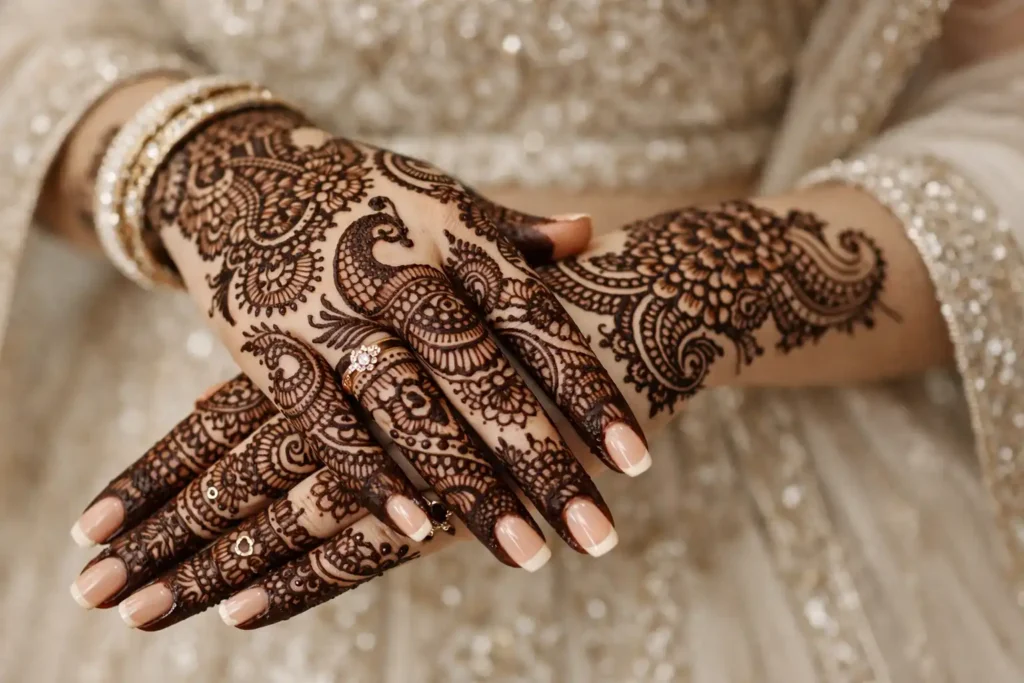
This is the most detailed and elaborate style. Bridal designs usually cover both hands completely, sometimes extending up to the elbows. They often include intricate patterns with peacocks, paisleys, flowers, and even tiny portraits of the bride and groom. These designs take hours to apply but create a stunning, unforgettable look for the big day. For more wedding-ready inspiration, explore our full collection of bridal mehndi designs.
Arabic Mehndi
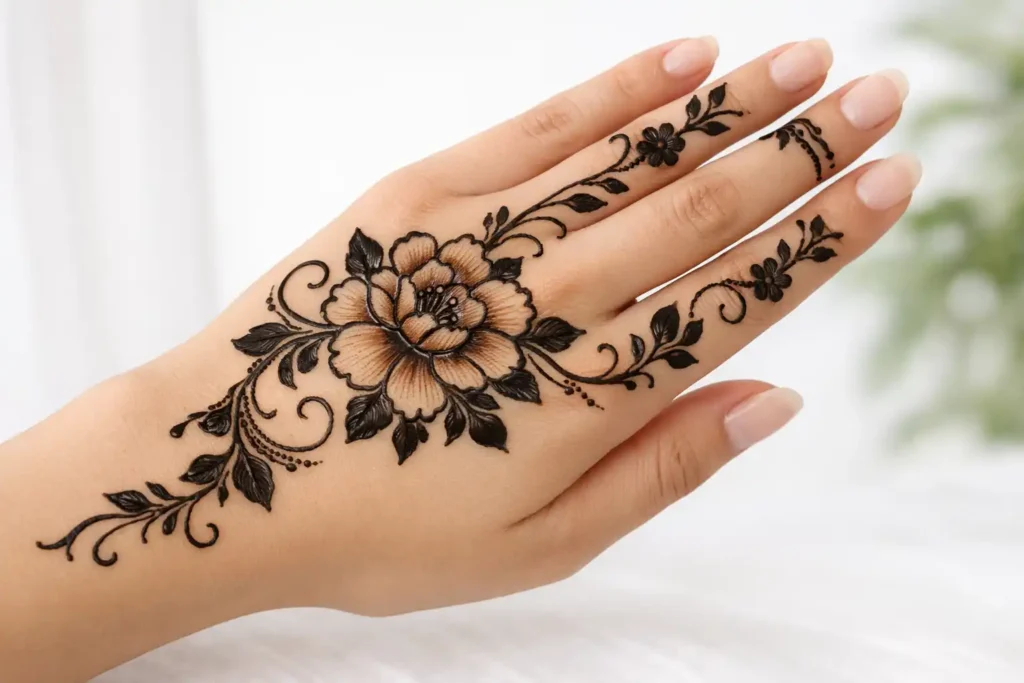
If you prefer something bold yet less crowded, Arabic mehndi is your go-to. These designs feature flowing patterns with lots of empty space. You’ll see large florals, vines, and leaves that create a modern, elegant appearance. Arabic styles work beautifully for both casual and formal events.
Minimal Mehndi
Not everyone wants their hands fully covered, and that’s completely fine. Minimal mehndi designs focus on small, delicate patterns—maybe just a bracelet-style design around the wrist, a few fingers decorated, or a simple pattern on the back of the hand. Perfect for office parties, casual gatherings, or anyone who loves understated beauty.
Traditional Indian Mehndi
Traditional designs are rich with cultural symbols and motifs. Think detailed paisleys, mandalas, peacocks, and temple designs. These styles cover more surface area and create a traditional, classic look that’s ideal for religious festivals and cultural celebrations.
Choosing the Right Design for Your Occasion
Now that you know the basic styles, let’s match the right mehndi design in hand to different occasions.
Weddings and Engagement Ceremonies
Weddings call for something special. A full mehndi design in hand that extends from fingertips to forearms looks absolutely gorgeous. Brides typically choose intricate patterns that tell a story. If you’re a wedding guest, you can go for something slightly simpler but still elegant—maybe a front-hand design with detailed fingertips and a beautiful centerpiece on the palm.
Eid and Religious Festivals
Religious celebrations are perfect for traditional patterns. Go for designs that include cultural motifs like crescents, stars, diyas, or mandalas. A back-hand design with geometric patterns looks stunning and respectful for these occasions. You don’t need to cover every inch—a well-placed pattern on the back with decorated fingers works beautifully.
Birthday Parties and Casual Events
For casual celebrations, keep it simple and fun. For little ones, our mehndi designs for children are quick and adorable. Try a minimal mehndi approach with just a few fingers decorated, or a small floral pattern on the side of your hand. You could also experiment with modern designs like hearts, stars, or even small quotes if you’re feeling creative.
Office Parties and Formal Gatherings
Professional settings call for subtle elegance. A thin bracelet-style design around your wrist or a small pattern on one or two fingers adds just enough charm without being too bold. Stick to clean lines and avoid anything too elaborate.
Festivals Like Diwali, Karva Chauth, and Teej
Traditional festivals deserve traditional mehndi. Choose designs that incorporate festival-specific symbols—diyas for Diwali, moon and stars for Karva Chauth. A beautiful mehndi design in hand with peacocks and paisleys never goes out of style for these celebrations.
Front-Hand vs. Back-Hand Designs
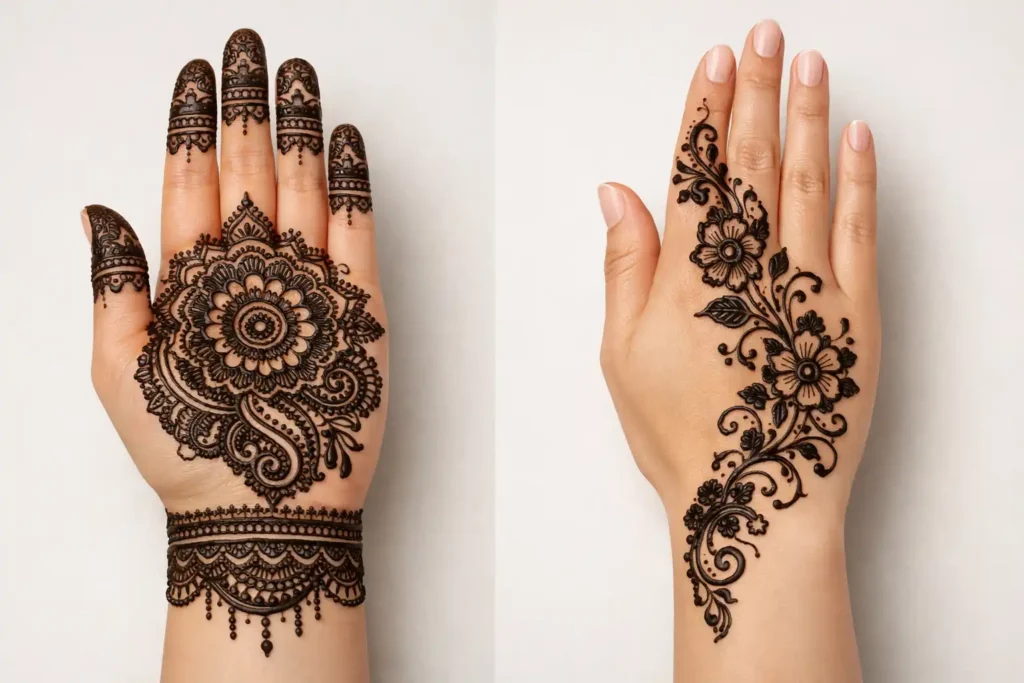
Your mehndi design in hand looks different depending on which side you decorate, so it helps to know both.
Front-Hand Designs
Palm designs are classic and eye-catching. The palm offers a large canvas for detailed work, and these designs show up darker because the skin is thicker. For dedicated palm ideas, see our simple palm mehndi designs. Front-hand patterns usually include a central motif surrounded by intricate details spreading toward the fingers. They’re perfect when you want your mehndi to be the center of attention. Beginners can start with these easy front hand simple mehndi designs.
Back-Hand Designs
Back-hand mehndi has become increasingly popular, especially among younger generations. These designs are more visible when you’re moving your hands naturally. They work well with rings and bracelets, creating a complete look. Back-hand patterns often feature flowing vines, florals, and geometric shapes that follow the natural curves of your hand.
Many people now choose to get both sides done for big occasions—detailed work on the palm and a complementary flowing design on the back.
Simple Mehndi Designs for Beginners
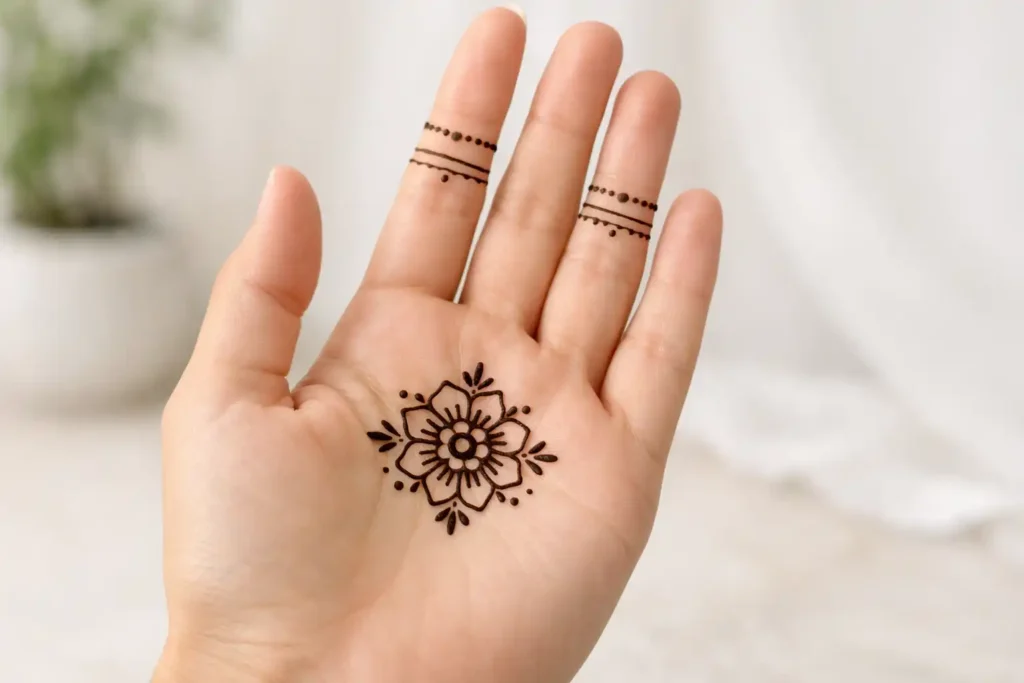
If you’re just starting out, a simple mehndi design in hand is the easiest way to build confidence.
Begin with a single floral motif in the center of your palm, add a few dots around it, and finish with thin lines down two or three fingers. A basic vine running from your wrist toward your fingertips also looks elegant and takes only minutes. These minimal patterns suit office days, casual gatherings, and first-time henna users who want a clean, pretty result without the wait.
Tips for Making Your Mehndi Last Longer
Even the most beautiful mehndi design in hand won’t look good if it fades too quickly. Here are some simple tips:
Keep your hands still while the mehndi dries. Don’t rush to scrape it off—let it fall naturally after at least 6-8 hours. Avoid water contact for as long as possible after removing the dried paste. Apply a mixture of lemon juice and sugar while the mehndi is still on to help it set darker. Henna’s natural staining comes from lawsone, a dye molecule in the henna plant, which is why aftercare affects how dark it gets. Once it’s off, rub some coconut oil or mustard oil on your hands to seal the color.
Why Professional Application Makes a Difference
While DIY mehndi can be fun for casual occasions, there’s something special about having a professional mehndi artist work their magic. A skilled artist understands how to balance design elements, knows which patterns suit different hand shapes, and can customize designs to match your outfit or the occasion perfectly.
Professional application also means cleaner lines, better symmetry, and a design that lasts longer. Artists know the right consistency for the mehndi paste and the proper application technique to ensure deep, rich color. It’s also worth knowing that only natural brown henna is considered safe for skin — dermatologists warn against “black henna,” which can contain PPD and cause reactions. If you’re preparing for an important event, reaching out to a local mehndi artist for a custom mehndi design in hand can make your celebration even more special. They can bring your vision to life and suggest ideas you might not have considered.
Final Thoughts
Mehndi isn’t just about following trends—it’s about finding a style that makes you feel confident and beautiful. Whether you love the intricate details of bridal mehndi, the flowing elegance of Arabic patterns, or the simplicity of minimal designs, there’s a perfect mehndi design in hand waiting for you.
Take your time browsing through different styles, consider the occasion, and don’t be afraid to mix elements from different traditions. You’ll find even more inspiration across our full mehndi designs collection. After all, your hands are your canvas, and the design should reflect who you are.
Frequently Asked Questions
Q: How long does mehndi typically last on hands?
A: Usually 1-3 weeks depending on care and skin type.
Q: Which mehndi design suits beginners best?
A: Simple Arabic or minimal finger designs work great initially.
Q: Can I mix different mehndi styles together?
A: Yes, combining Arabic and traditional elements looks beautiful together.
Q: How can I make my mehndi color darker?
A: Keep paste on longer, apply lemon-sugar, avoid water after removal.
Q: Are back-hand designs better than front-hand designs?
A: Both are beautiful; back-hand shows more, palm designs darken better.
Q: What is the most popular mehndi design in hand?
A: Arabic and floral patterns are the most popular for their balance of beauty and simplicity.
Q: How long does a full hand mehndi design take?
A: Detailed bridal designs take 2–4 hours, while simple patterns take 15–30 minutes.
Q: Which hand should mehndi be applied on first?
A: Traditionally the dominant hand, though many decorate both for special occasions.