

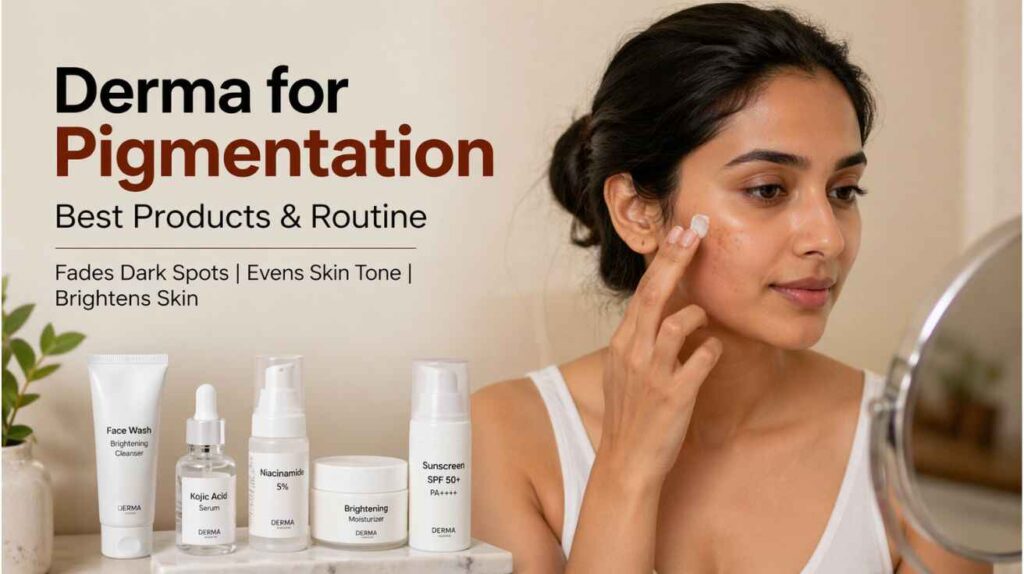
Pigmentation means some areas of your skin look darker than others. It can show as brown spots, dark patches, acne marks, melasma patches, sun spots, or uneven skin tone. This happens when your skin makes extra melanin, the natural color pigment in your skin. Common causes include acne, sun exposure, hormones, skin injury, harsh products, and aging.
What Is Pigmentation on the Face?
Pigmentation on the face is not always the same for everyone. Some people get dark marks after pimples. Some get brown patches from melasma. Others get sun spots due to years of sun exposure.
It may appear as:
- Dark spots
- Brown spots on face
- Acne marks
- Melasma patches
- Sun spots
- Dull skin
- Uneven complexion
To choose the right derma cream for pigmentation or pigmentation serum, you first need to know what type of pigmentation you have.
Types of Pigmentation and Best Derma Solution
| Pigmentation Type | What It Looks Like | Best Ingredients | Best Product Type |
|---|---|---|---|
| Acne Marks / PIH | Brown marks after pimples | Niacinamide, Azelaic Acid, Alpha Arbutin | Pigmentation serum |
| Melasma | Brown or gray patches on cheeks, forehead, or upper lip | Tranexamic Acid, Kojic Acid, Sunscreen | Melasma cream + SPF |
| Sun Spots | Small brown spots from sun damage | Vitamin C, Retinol, Sunscreen | Dark spots serum |
| Tanning | Overall dull or darker skin | Vitamin C, AHA, Sunscreen | Skin brightening serum |
| Sensitive Skin Pigmentation | Dark marks with redness | Niacinamide, Azelaic Acid | Gentle derma cream |
| Stubborn Pigmentation | Old and deep patches | Tranexamic Acid, Retinoid, Dermatologist treatment | Serum + consultation |
Post-inflammatory hyperpigmentation, also called PIH, often happens after acne or skin injury. DermNet says broad-spectrum sunscreen is important because UV rays can make PIH darker.

Best Ingredients in Derma Products for Pigmentation
A good derma product for pigmentation should have active ingredients that match your skin concern.
Kojic Acid for Pigmentation
Kojic acid is used in many anti-pigmentation creams and dark spot serums. It may help reduce the look of dark spots, brown patches, melasma patches, and uneven skin tone. It can be strong, so sensitive skin users should start slowly.
Niacinamide for Dark Spots
Niacinamide is a gentle ingredient. It is often used for acne marks, PIH, redness, oily skin, dull skin, and uneven complexion. It is a good choice for people who want a mild but useful ingredient.
Tranexamic Acid for Melasma
Tranexamic acid is commonly used for melasma and stubborn pigmentation. It may help with hormonal pigmentation and brown patches. Melasma can be slow to fade, so sunscreen and regular use are very important.
Azelaic Acid for Acne Marks
Azelaic acid can help acne-prone skin. It is useful for acne marks, PIH, oily skin pigmentation, and sensitive skin. It may also help calm the skin while targeting uneven tone.
Vitamin C for Sun Spots and Dull Skin
Vitamin C is often used in the morning. It helps with dull skin, sun spots, and skin brightening. It works best when used with broad-spectrum sunscreen.
Retinol for Uneven Skin Tone
Retinol supports skin renewal. It can help with texture, age spots, uneven skin tone, and stubborn marks. It should be used at night and introduced slowly.
Ingredient Comparison Table
| Ingredient | Best For | Best Time to Use | Skin Type |
|---|---|---|---|
| Kojic Acid | Dark spots, melasma | Night | Normal to oily skin |
| Niacinamide | Acne marks, redness, uneven tone | Morning or night | Most skin types |
| Tranexamic Acid | Melasma, stubborn pigmentation | Morning or night | Most skin types |
| Azelaic Acid | Acne marks, PIH, oily skin | Morning or night | Acne-prone skin |
| Vitamin C | Dull skin, sun spots | Morning | Normal to dry skin |
| Retinol | Texture, age spots, uneven tone | Night | Not for very sensitive skin |
| Sunscreen | All pigmentation types | Morning | All skin types |
Which Derma Product Is Best for Your Pigmentation?
| Skin Concern | Best Product Type | Best Ingredients |
|---|---|---|
| Acne marks | Pigmentation serum | Niacinamide, Azelaic Acid |
| Melasma | Melasma serum or cream | Tranexamic Acid, Kojic Acid |
| Dark spots | Dark spots cream or serum | Kojic Acid, Alpha Arbutin, Vitamin C |
| Dull skin | Skin brightening serum | Vitamin C, Niacinamide |
| Sensitive skin | Gentle derma cream | Niacinamide, Azelaic Acid |
| Oily skin | Lightweight serum | Azelaic Acid, Niacinamide |
| Stubborn pigmentation | Dermatologist recommended cream | Tranexamic Acid, Retinoid, SPF |
If you are not sure what type of pigmentation you have, start with a gentle product and daily sunscreen. If the spots do not improve, speak to a dermatologist.
Best Morning Routine for Pigmentation
A morning routine should protect your skin from sun damage. This matters because the sun can make pigmentation darker.
| Step | Product | Why It Helps |
|---|---|---|
| 1 | Gentle cleanser | Cleans skin without damage |
| 2 | Vitamin C or niacinamide serum | Helps dull skin and uneven tone |
| 3 | Moisturiser | Keeps skin barrier strong |
| 4 | Broad-spectrum sunscreen SPF 30+ | Helps prevent new dark spots |
The American Academy of Dermatology says dark spot treatment begins with sunscreen. It recommends broad-spectrum SPF 30 or higher. Sunscreen can help stop new dark spots and support fading of existing marks.
Best Night Routine for Pigmentation
A night routine should repair the skin and target dark spots.
| Step | Product | Why It Helps |
|---|---|---|
| 1 | Gentle cleanser | Removes dirt and sunscreen |
| 2 | Kojic acid, azelaic acid, or tranexamic acid serum | Targets pigmentation |
| 3 | Moisturiser | Reduces dryness and irritation |
| 4 | Retinol 2–3 nights weekly | Helps skin renewal |
Do not use too many strong products at one time. This can damage your skin barrier and cause burning, peeling, redness, or more dark spots.
Derma Cream vs Pigmentation Serum
Both can help, but they work differently.
| Product Type | Best For | Why Choose It |
|---|---|---|
| Pigmentation serum | Acne marks, melasma, dark spots | Light and active-focused |
| Derma cream for pigmentation | Dry or sensitive skin | Adds moisture and comfort |
| Dark spots cream | Small dark marks | Good for spot care |
| Skin brightening serum | Dull skin and uneven tone | Helps glow |
| Anti-pigmentation cream | Overall pigmentation control | Easy daily use |
If your skin is oily, choose a light serum. If your skin is dry, choose a cream. If your skin is sensitive, start with gentle ingredients.
Derma Products vs Dermatologist Treatment
Some pigmentation can improve with skincare. Some needs a dermatologist.
| Condition | Product May Help? | See Dermatologist? |
|---|---|---|
| Fresh acne marks | Yes | Not always |
| Mild tanning | Yes | Not usually |
| Sun spots | Sometimes | If they grow or change |
| Melasma | Sometimes | Often helpful |
| Deep dark patches | Not always | Yes |
| Pigmentation with itching or pain | No | Yes |
| Fast-spreading patches | No | Yes |
AAD says melasma often needs a plan that includes sun protection, medicine applied to the skin, and sometimes procedures. DermNet also notes that peels and lasers may help, but they must be used carefully because they can sometimes make pigmentation worse.
How Long Does Pigmentation Take to Fade?
Pigmentation takes time. Results do not appear in one week.
| Pigmentation Concern | Usual Time |
|---|---|
| Light acne marks | 6–12 weeks |
| Dull skin | 6–12 weeks |
| Sun spots | 8–12 weeks or more |
| Melasma | 3–6 months or longer |
| Deep pigmentation | May take years or need treatment |
AAD says some dark spots may take 6 to 12 months to fade after the cause is stopped. If pigment is deep in the skin, fading may take years.
Best Derma Pigmentation Products by Concern
Choose your product based on your skin concern, not just the product name.
Best Serum for Acne Marks and PIH
Choose a serum with niacinamide, azelaic acid, or alpha arbutin.
Best for:
- Acne marks
- Dark acne marks
- Post-inflammatory hyperpigmentation
- Oily skin
Best Serum for Melasma
Choose a serum with tranexamic acid, kojic acid, or niacinamide. Use sunscreen every morning for better results.
Best for:
- Melasma patches
- Hormonal pigmentation
- Stubborn brown patches
Best Cream for Dark Spots
Choose a cream with kojic acid, alpha arbutin, vitamin C, or niacinamide.
Best for:
- Brown spots
- Uneven skin tone
- Dry skin
- Dark spots
Best Sunscreen for Pigmentation
Choose SPF 30 or higher with broad-spectrum protection. Tinted sunscreen with iron oxide can also help protect against visible light.
Best for:
- Melasma
- Sun spots
- Daily pigmentation care
Common Mistakes That Make Pigmentation Worse
Avoid these mistakes:
- Skipping sunscreen
- Using harsh scrubs
- Using many active ingredients together
- Using bleaching creams
- Using steroid creams without a doctor
- Picking pimples
- Stopping products after one week
- Ignoring redness or burning
AAD warns that some dark spot products may contain harmful ingredients like steroids or mercury. So always choose safe and trusted skincare.
Before You Buy
Before buying a derma cream for pigmentation or dark spots serum, check your pigmentation type, skin type, and ingredient list. Do a patch test first. Use sunscreen every morning. Give the product at least 8–12 weeks. If you have stubborn melasma, painful patches, or fast-spreading dark spots, see a dermatologist.
FAQs
What is the best derma product for pigmentation?
The best product depends on the type of pigmentation. Acne marks may need niacinamide or azelaic acid. Melasma may need tranexamic acid, kojic acid, and sunscreen.
Which cream is best for pigmentation?
A good pigmentation cream may include kojic acid, alpha arbutin, niacinamide, vitamin C, or azelaic acid.
Is sunscreen necessary for pigmentation?
Yes. Sunscreen is one of the most important steps. Without sunscreen, pigmentation can become darker or come back again.
How long does pigmentation take to fade?
Light spots may fade in 6–12 weeks. Melasma and deep pigmentation may take months or longer.
Final Thoughts
The best derma for pigmentation is not one single cream or serum. It depends on your skin type and the cause of your dark spots. For acne marks, choose niacinamide or azelaic acid. For melasma, look for tranexamic acid, kojic acid, and daily sunscreen. For sun spots and dull skin, vitamin C and SPF can help.