

Mehndi artwork has captivated people for centuries with its intricate patterns and deep cultural roots. For many, applying henna is a cherished ritual passed down through generations. For others, it is a newly discovered passion that blends artistic expression with natural cosmetics.
This guide explores the fascinating journey of henna from ancient traditions to contemporary fashion statements. The current online landscape often leaves beginners searching for a central resource that offers more than just stock photos or dry academic definitions. You need practical advice paired with cultural appreciation.
By reading this post, you will uncover the history behind the art, explore various global styles, and pick up practical tutorials for creating your own stunning designs at home.
The History and Cultural Significance of Mehndi
Mehndi is a popular form of body art in South Asia and resembles similar traditions of henna as body art found in North Africa, East Africa and the Middle East. The practice of applying Mehndi, or henna, dates back over 5,000 years.
Early documentation suggests it was used in ancient Egypt, where Pharaohs were adorned with henna prior to mummification. Eventually, the practice spread across the Middle East and the Indian subcontinent.
Initially, people used the crushed leaves of the henna plant (Lawsonia inermis) for their natural cooling properties. Desert communities would soak their hands and feet in henna paste to regulate their body temperature. As the stain faded, leaving behind fascinating patterns on the skin, the practice evolved into a decorative art form.
Today, Mehndi holds immense cultural significance. It is a central element in Hindu weddings, symbolizing joy, beauty, and spiritual awakening. During festivals like Diwali, Eid, and Karva Chauth, family members gather to apply detailed patterns to one another, celebrating community and tradition.
Traditional vs. Modern Styles
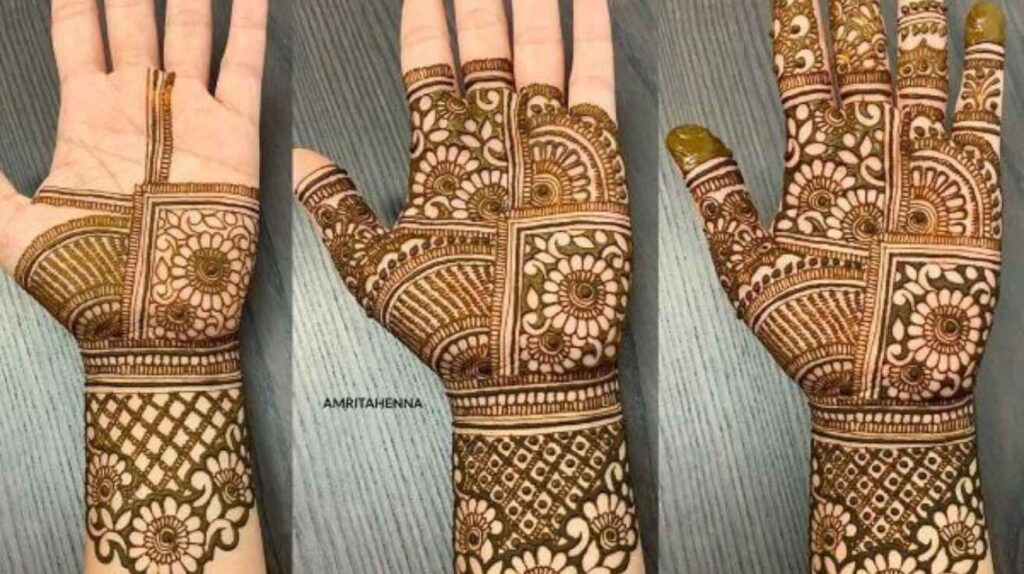
Mehndi artists across the globe have developed distinct regional styles. Understanding these variations can help you find inspiration for your own artwork.
Indian Mehndi
Indian designs are highly detailed and dense. Artists typically cover the entire hand and forearm, leaving very little skin exposed. These patterns frequently feature representations of peacocks, paisleys, intricate mandalas, and even miniature portraits of the bride and groom.
Arabic Mehndi
Arabic styles take a more minimalist approach. The designs are usually flowing and vine-like, trailing gracefully down the finger and across the palm. Artists incorporate a significant amount of negative space, allowing the bold floral motifs and leafy vines to stand out beautifully.
Moghul Mehndi
Moghul designs are known for their precision and geometric focus. Drawing heavily from ancient architecture, this style features prominent arches, sharp grid patterns, and structured floral arrangements.
Fusion Styles
Modern artists frequently blend these traditional elements together. A fusion design might feature the bold, flowing vines of Arabic henna filled with the dense, intricate shading typically found in Indian Mehndi.
Modern Innovations in Henna Art
The world of temporary body art is constantly evolving. Artists have introduced new materials and techniques to suit contemporary fashion trends and specific events.
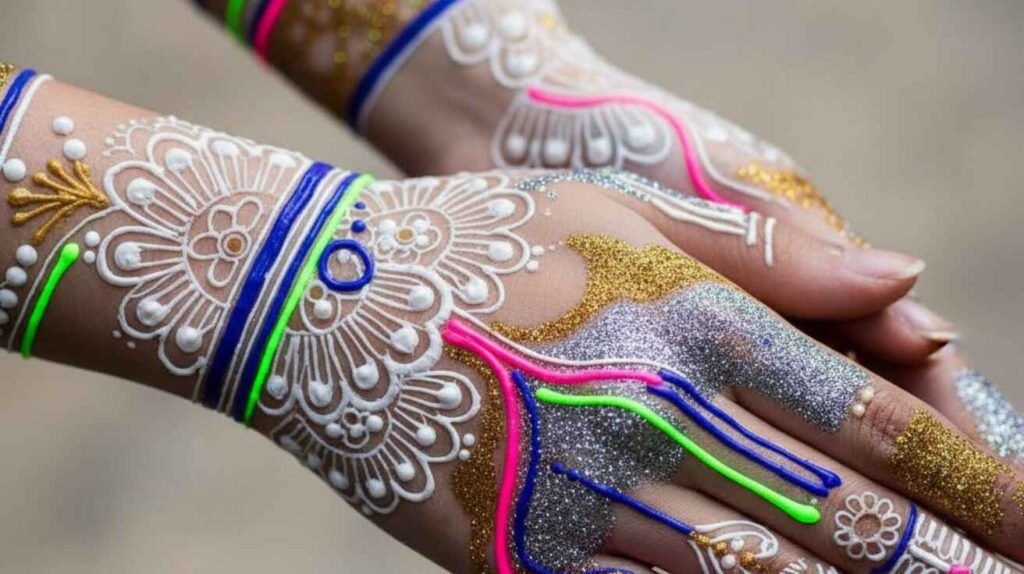
White Henna
Unlike traditional henna, white henna does not actually stain the skin. It is a specialized, skin-safe adhesive body paint. White henna rests on top of the skin and typically lasts for a few days. It has become incredibly popular for modern weddings, offering a delicate, lace-like appearance that complements white bridal gowns beautifully.
Glitter Mehndi
Glitter Mehndi adds a touch of sparkle to traditional stains. Artists apply standard henna paste and then dust cosmetic-grade glitter over the wet design. Alternatively, they use colorful glitter gels alongside the henna to highlight specific floral centers or arches.
Neon Designs
Festival-goers and party enthusiasts have embraced neon body paints applied using traditional Mehndi techniques. These UV-reactive paints glow under blacklights, creating a striking visual effect for nighttime events.
Step-by-Step Guide for Beginners
Starting your Mehndi journey requires a few basic supplies and a bit of patience. Follow these steps to prepare your paste and practice your first patterns.
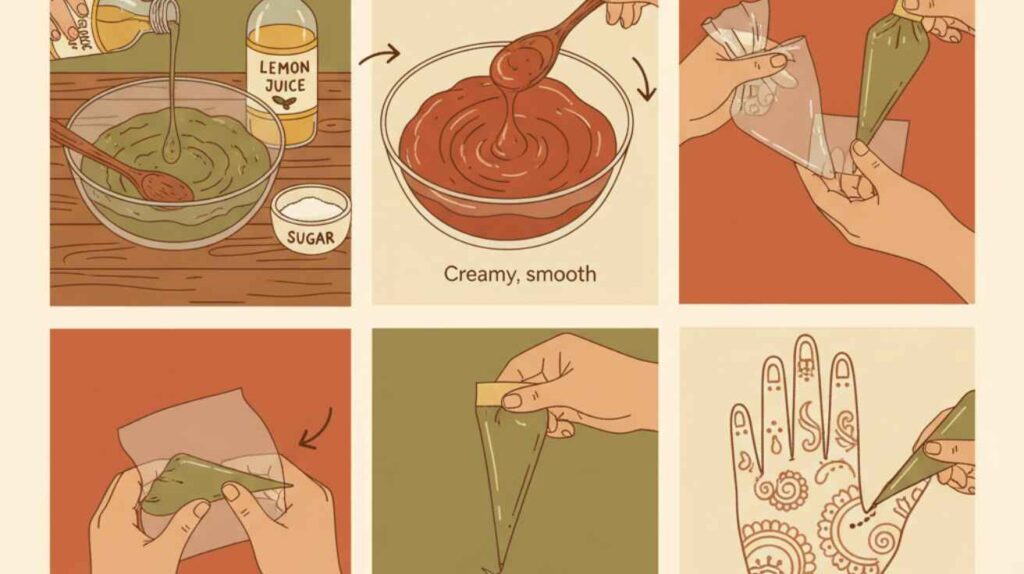
1. Gather Your Tools
You will need high-quality, body art-quality (BAQ) henna powder. Avoid pre-mixed cones sold in commercial stores, as they often contain harmful chemical preservatives. You will also need lemon juice, granulated sugar, a skin-safe essential oil like eucalyptus or lavender, and a plastic applicator cone.
2. Prepare the Paste
Sift your henna powder into a glass bowl to remove any large twigs or leaves. Gradually stir in the lemon juice until the mixture resembles thick mashed potatoes. Add a teaspoon of sugar to help the paste adhere to the skin, followed by a few drops of essential oil to darken the final stain. Cover the bowl with plastic wrap and let it sit at room temperature for roughly 12 to 24 hours to allow the dye to release.
3. Practice Basic Patterns
Before applying paste to your skin, practice on a piece of paper or an acrylic board. Start by squeezing the cone gently to create uniform dots. Next, practice drawing straight lines of varying thickness. Once you feel comfortable controlling the flow of the paste, try combining dots and lines to form simple flowers, teardrops, and vines.
Tips for Long-Lasting Henna Stains
A beautiful Mehndi design requires proper aftercare to reach its full color potential. The stain develops through an oxidation process that takes time.
- Leave the paste on: Keep the dried paste on your skin for a minimum of four to six hours. For the darkest possible stain, wrap the area gently in medical tape or tissue and leave it on overnight.
- Seal the design: While the paste is drying, lightly dab a mixture of lemon juice and sugar over the design using a cotton ball. This sticky glaze prevents the dry henna from cracking and falling off prematurely.
- Avoid water: When you are ready to remove the paste, gently scrape it off with a butter knife or your fingernails. Do not wash it off with water. Keep the area completely dry for the first 24 hours to allow the stain to darken from bright orange to a deep mahogany brown.
- Moisturize: Protect the stain by applying a natural barrier like coconut oil or beeswax lip balm before showering or swimming.
The Versatility of Mehndi Designs
The aesthetic appeal of Mehndi has expanded far beyond body art. Crafters and designers frequently adapt these intricate patterns for various artistic mediums.
Artists apply henna paste directly to wooden jewelry boxes, canvas frames, and pillar candles. Once the paste dries, they seal it with clear acrylic paint, preserving the raised texture of the design. Additionally, the fashion industry frequently utilizes Mehndi motifs. You will easily spot paisley and mandala patterns inspired by henna art printed on textiles, embroidered onto bags, and stamped into leather goods.
Start Your Own Mehndi Journey
Mehndi is a remarkable art form that honors ancient traditions while readily adapting to modern creativity. By understanding the cultural history, recognizing the different regional styles, and practicing basic application techniques, you can participate in this beautiful global practice.
Grab a cone of natural henna and start experimenting with simple dots and vines on paper. With practice and patience, you will soon be creating elaborate, stunning designs. We would love to hear about your progress. Share your favorite Mehndi styles or your beginner experiences in the comments below.
FAQs
- What is Mehndi artwork?
Mehndi artwork is a traditional form of body art using henna paste to create intricate patterns on the skin, often for cultural or celebratory purposes. - What are the different styles of Mehndi?
The main styles include Indian Mehndi (dense and detailed), Arabic Mehndi (minimalist with bold floral patterns), Moghul Mehndi (geometric and architectural), and Fusion styles (a blend of traditional elements). - How do I make henna paste at home?
Mix sifted henna powder with lemon juice, sugar, and essential oils. Let it sit for 12-24 hours for dye release before use. - What are modern innovations in Mehndi?
Modern trends include white henna, glitter mehndi, and neon designs, which cater to contemporary fashion and events. - How can I make my henna stain last longer?
Leave the paste on for 4-6 hours, seal it with lemon-sugar glaze, avoid water for 24 hours, and moisturize with coconut oil. - What is the cultural significance of Mehndi?
Mehndi symbolizes joy, beauty, and spiritual awakening, often used in weddings, festivals, and other celebrations. - Can Mehndi designs be used beyond body art?
Yes, Mehndi patterns are adapted for home decor, fashion, and crafts, such as on textiles, candles, and leather good.