

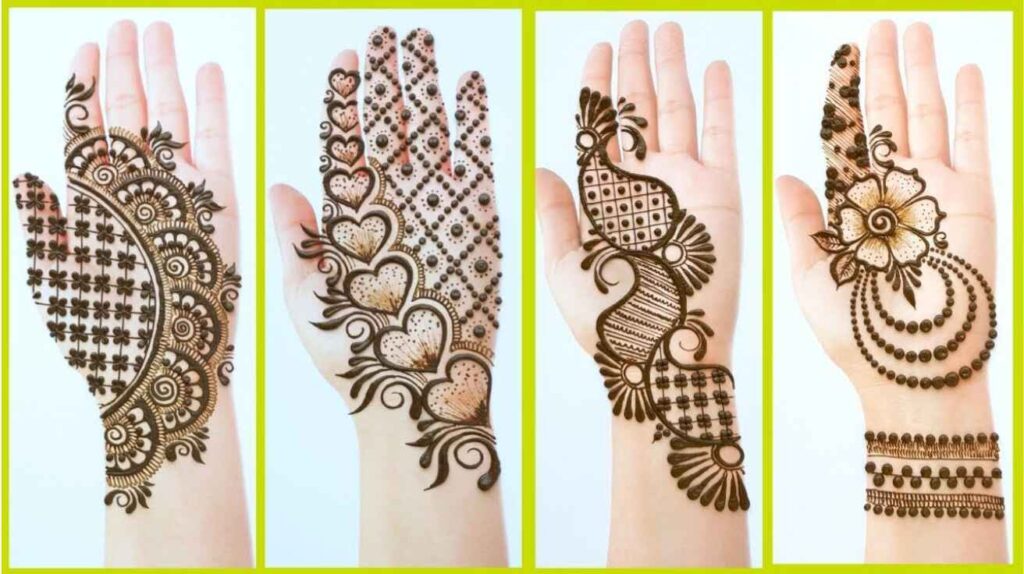
Mehndi designs fall into four main styles Arabic (bold floral, open spaces), bridal (dense full coverage with fine detail), simple/minimal (small flowers and vine trails for beginners), and fusion (geometric + floral mix). Style choice depends on the occasion .Bridal needs full coverage, Eid suits Arabic or simple designs, and casual events work perfectly with finger or back-hand minimal patterns.
Why Mehndi Is More Than Just a Design
Every time someone sits in front of me for mehndi, they already have something in mind a feeling, an occasion, an image they saw on Pinterest. The design matters. But what matters just as much is choosing the right style for the right moment.
A heavy bridal design on someone attending a casual gathering looks out of place. A single flower on a bride looks incomplete. This guide is not just a gallery of patterns. It tells you what each mehndi style actually is, when to use it, how to apply it, and how to keep the color dark for as long as possible.
What Makes Each Mehndi Style Unique?
Before diving into individual designs, here is a quick way to tell each major mehndi style apart:
| Style | Line Weight | Coverage | Time to Apply | Best For |
|---|---|---|---|---|
| Arabic | Bold, thick | 40–60% of hand | 15–30 min | Eid, weddings, casual |
| Bridal (Pakistani/Indian) | Fine, detailed | 80–100% of hand | 2–5 hours | Wedding ceremonies |
| Simple/Minimal | Light, sparse | 20–40% | 5–15 min | Beginners, kids, daily |
| Fusion | Varies | 50–70% | 30–60 min | Modern occasions, photoshoots |
Arabic Mehndi Designs Bold, Free-Flowing and Modern
Arabic mehndi is the style I get asked about most. There is something about the way it moves across the hand thick strokes flowing into thin curves, large flowers that breathe instead of crowd that feels confident and effortless at the same time.
The key characteristic of Arabic mehndi is negative space. Unlike Indian styles that aim to fill every inch, Arabic designs intentionally leave skin visible between motifs. That spacing is not a mistake or a shortcut. It is the entire aesthetic.
Core motifs you will see in Arabic designs: large single flowers (rose, lotus), bold leaf vines running diagonally across the palm, paisley (boteh) shapes, and geometric dot work at the wrist or fingertips.
Classic Arabic Back Hand Designs
The most popular placement for Arabic mehndi is the back of the hand. The design typically starts at the base of one or two fingers and trails diagonally across the back of the hand toward the wrist sometimes extending slightly up the forearm for bridal or formal occasions.
What makes this work is the diagonal flow. It follows the natural movement of the hand, which is why Arabic back-hand designs look so good in photos and in motion.
Easy Arabic Designs for Beginners
If you are new to applying mehndi, Arabic style is actually your best starting point not despite the bold lines, but because of them. Bold strokes are more forgiving than fine detailing. A single large flower with three or four leaves along the wrist is a legitimate Arabic design that a beginner can complete in under ten minutes.
Start with: One large five-petal flower on the back of the hand, two leaf branches curving toward the wrist, and three dots at the tip of the ring finger. That is a complete, wearable Arabic design.
Pakistani Arabic vs Gulf Arabic Style The Real Difference
This distinction gets completely ignored in most mehndi guides, and it matters if you are trying to match a specific aesthetic.
Pakistani Arabic mehndi tends to combine Arabic negative space with some elements borrowed from Indian bridal styles you will see fine shading inside the large flowers, more finger coverage, and sometimes a full back-hand design that blends into the wrist. It bridges the gap between minimalist Arabic and elaborate South Asian bridal.
Gulf Arabic mehndi (influenced by UAE, Saudi, Bahraini styles) is typically sparser, more geometric, and uses bolder outlines with even more open space. It often features thick border lines at the wrist and minimal coverage on the palm. The overall look is cleaner and more structured.
Bridal Mehndi Designs Full Hand, Arms and Legs
Bridal mehndi is in a category of its own. The scale, the detail, the time investment everything about it is different from any other occasion mehndi. I have sat for three-hour bridal sessions and watched the design slowly turn both palms and forearms into something genuinely breathtaking.
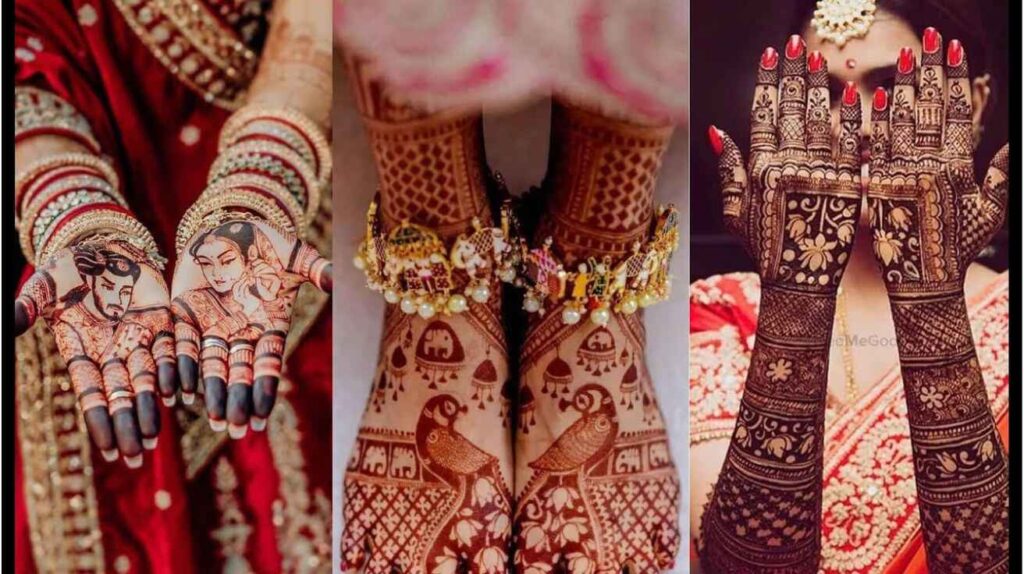
Pakistani and Indian bridal mehndi designs are characterized by dense coverage with fine-line detailing paisleys layered within paisleys, small floral fillers inside larger motifs, finger designs that continue from nail to wrist without a break, and netted jaal patterns that require a steady hand and real patience.
Pakistani Bridal Full Hand Designs
Pakistani bridal mehndi typically covers the full palm, back of hand, all five fingers, and often extends 3–5 inches up the forearm. The most requested motifs are: peacock with spread tail, floral jaal (net pattern), dulha-dulhan (bride and groom) portrait on the palm, and bracelet-style designs at the wrist that imitate jewelry.
Henna cone tip: For bridal work, use only fresh, chemical-free henna cones. The ones that promise “instant black” or “jet black color” contain PPD (para-phenylenediamine), a chemical that can cause severe allergic reactions. Natural henna gives a reddish-brown stain that darkens to deep maroon over 48 hours.
Minimal Bridal For the Modern Bride
Not every bride wants full coverage, and that preference is completely valid. Minimal bridal mehndi focuses on a single large statement design a mandala on the back of the hand, or a long diagonal floral trail from the middle finger to the wrist rather than covering every inch.
The benefit beyond aesthetics: minimal bridal designs take 30–45 minutes instead of 3–5 hours, and they look equally striking in photographs, especially when paired with clean, modern bridal outfits.
Bridal Feet and Leg Mehndi
Bridal mehndi on the feet deserves its own attention. The most common designs cover the top of the foot from the toes to the ankle, with a trailing vine or ankle band that circles the heel. For brides wearing open sandals or jootis (traditional shoes), the foot mehndi is as visible as the hand design sometimes more so in certain poses.
The skin on the feet absorbs henna differently than the hands it tends to stain darker on the sole and lighter on the top of the foot. If you want even color, apply slightly heavier paste on the top-of-foot designs.
Simple Mehndi Designs For Kids, Beginners and Casual Occasions
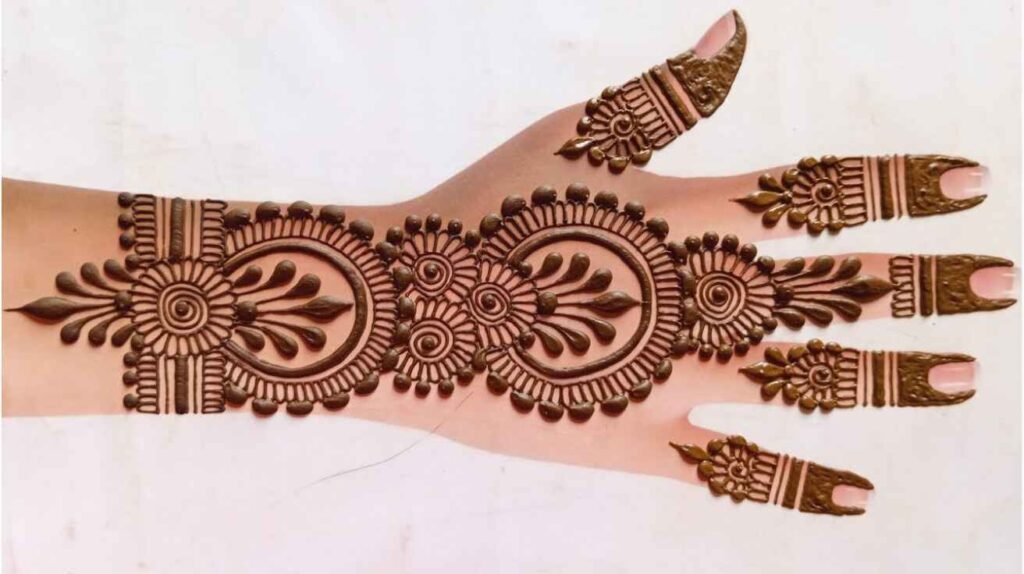
Simple mehndi does not mean boring. Some of the most elegant-looking designs I have applied took under ten minutes a single flower on the index finger, a vine trail along the wrist, or three small stars on the back of the hand.
For kids’ mehndi, keep it small, quick, and playful. Children’s hands are small, and sitting still for long is difficult. A small flower, a butterfly outline, or a star cluster on the back of the hand works perfectly for Eid or weddings. Always use natural henna on children their skin is more sensitive and more likely to react to chemical additives.
For Eid casual designs, the sweet spot is a design that takes 10–20 minutes and looks intentional without being overdone. A single Arabic floral trail on the back of the hand or a simple vine along the fingers fits this perfectly.
Finger and Foot Mehndi Small Designs, Big Impact
This category gets overlooked in most mehndi guides, which tend to focus on full-hand or bridal designs. But finger mehndi and foot mehndi are some of the most wearable, everyday designs that work for any occasion without the commitment of a full hand design.
Finger mehndi: Individual finger designs typically a ring-style band around one finger, or a half-finger design from nail to first knuckle have become increasingly popular for modern brides who want something unconventional and for casual wearers who want mehndi without covering the palm.
Foot mehndi (single foot): Applying mehndi to just one foot is a subtle and increasingly popular choice. A mandala on the top of the foot or an ankle band with small floral drops is low-effort, quick to apply, and photographs beautifully.
Application tip for feet: The skin on the bottom of the foot stains significantly darker than the top. A plain sole design just a mandala or simple geometric pattern can give a much deeper stain than an elaborate back-of-foot design.
Mehndi by Occasion What to Choose and When
This decision framework is something I always walk through with anyone who asks me to design for them:
Eid (Eid ul Fitr or Eid ul Adha)
Best choice: Easy Arabic or simple back-hand design. Eid mehndi should be festive but not time-consuming. You are likely doing it yourself or at a quick function before prayers. A floral trail design or wrist mandala takes 15–20 minutes and still looks polished.
Wedding Guest
Best choice: Half-hand Arabic or moderate back-hand design. You want something that looks intentional and celebratory without competing with the bride. Avoid heavy full-hand designs as a guest save those for the bride.
Kids (Eid or Wedding)
Best choice: Simple flower, star, or butterfly on the back of one hand. Keep it to one motif, use natural henna only, and apply quickly. The faster you finish, the better the end result children do not hold still well, and a rushed but simple design looks better than an elaborate one applied while they squirm.
Nikah or Engagement Ceremony
Best choice: Moderate-detail Arabic or fusion design. More than a casual Eid design, but not as heavy as full bridal. A half-hand design or a back-hand design that continues into the fingers strikes the right balance.
How to Apply Mehndi at Home Step by Step
This is the section almost every mehndi gallery site forgets to include.
What you need: Fresh natural henna cone, tissue paper, a toothpick (for corrections), lemon-sugar syrup (recipe: 1 tablespoon lemon juice + 1 teaspoon sugar, warmed), and clove steam or eucalyptus oil for aftercare.
Step 1: Practice the design on paper first. Seriously draw it two or three times on a piece of white paper before touching your hand. This builds muscle memory and reveals where the cone pressure needs adjustment.
Step 2: Start from the top of the design and work downward. This prevents smudging what you have already applied.
Step 3: Keep the cone tip close to the skin about 1–2mm away. The closer you hold it, the thinner and more precise the line.
Step 4: Once you finish, let the paste dry completely (about 20–30 minutes), then apply lemon-sugar syrup gently over the design. This keeps the paste moist and helps the dye penetrate deeper.
Step 5: Leave the paste on for at least 4 hours. Overnight (6–8 hours) gives the deepest color. The longer it stays, the darker the stain.
Aftercare How to Darken Your Mehndi Color
The color of mehndi when you first scrape off the paste is not the final color. Fresh-off mehndi is typically orange. Over the next 24–48 hours, oxidation deepens it to reddish-brown, and then deep maroon this is the final color.
To get the darkest possible stain:
- After removing the paste, do not wash with water for at least 12 hours. Water exposure in the first few hours prevents full oxidation.
- Apply mustard oil, coconut oil, or Vicks VapoRub over the dry mehndi immediately after scraping. This locks in warmth and accelerates oxidation.
- Avoid washing dishes, swimming, or prolonged water contact for the first 24 hours.
- Warm environments darken mehndi. Sitting near warmth (not direct heat) for 30 minutes after application can intensify the stain.
What reduces color: Soap, hand sanitizer, chlorine from swimming pools, and excessive sweating in the first 48 hours.
FAQs
Q: How long does mehndi last?
A: 1–3 weeks; palms last longer, oily skin fades faster.
Q: Is there a safe mehndi cone for children?
A: Yes, use natural henna only no chemicals, perfumes, or PPD.
Q: How do I fix a mistake while applying?
A: Scrape off fresh paste with a toothpick; practice prevents errors.
Q: Why did my mehndi turn orange instead of dark?
A: Paste removed too soon, poor quality henna, or insufficient aftercare.
Q: Can I apply mehndi during my period?
A: Yes, menstruation does not affect mehndi color.
Q: Difference between Arabic and Indian bridal mehndi?
A: Arabic: bold, spaced designs; Indian: dense, detailed, full-hand coverage.