


Start with cleanser, moisturizer, and sunscreen first. Keep it simple and stay consistent.
Why Your Skin Needs a Routine?
Walk into any drugstore and you will find a wall of serums, toners, acids, mists, and masks all promising to fix your skin overnight. It is overwhelming, and honestly? Most of it is unnecessary if you are just starting out.
Here is the truth: the best skincare routine is the one you will actually do every day. That means keeping it simple, understanding what your skin needs, and building slowly.
This guide lays out a daily routine for beginners step by step — no fluff, no unnecessary products, and no advice that costs you a fortune. Whether your skin is oily, dry, or somewhere in between, the foundation stays the same.
Daily Skincare Routine for Beginners Quick Table
| Step | Product | When | Key Ingredient |
|---|---|---|---|
| 1 | Cleanser | AM + PM | Glycerin, Ceramides |
| 2 | Toner (optional) | AM + PM | Niacinamide, Rose Water |
| 3 | Serum — Vit C (AM) / HA (PM) | AM or PM | Vitamin C, Hyaluronic Acid |
| 4 | Moisturizer — Gel (AM) / Cream (PM) | AM + PM | Ceramides, Peptides |
| 5 | Sunscreen SPF 30+ | AM ONLY | Zinc Oxide |
Golden Rule: Thinnest to thickest. Sunscreen always last. New product = 6 weeks wait before judging.
Don’t mix: Vitamin C + Retinol • Retinol + AHA/BHA • Niacinamide + Direct Acids
Know Your Skin Type First
Before buying a single product, spend one week paying attention to your skin. This will save you money and frustration.
Wash your face with a gentle cleanser, pat it dry, and wait 30 minutes without applying anything. Then observe:
- Oily all over? Your skin produces excess sebum. You need lightweight, non-comedogenic products.
- Dry and tight? Your skin lacks moisture. Look for creamy, hydrating formulas.
- Oily T-zone, dry cheeks? That is combination skin. You may need to use different products on different areas.
- Redness or stinging easily? Sensitive skin — fragrance-free and minimal-ingredient products are your best friends.
- No major issues? You have normal skin. Lucky you.
Most people with South Asian or darker skin tones tend to have oilier skin with a tendency toward hyperpigmentation. Keep this in mind as you select products.
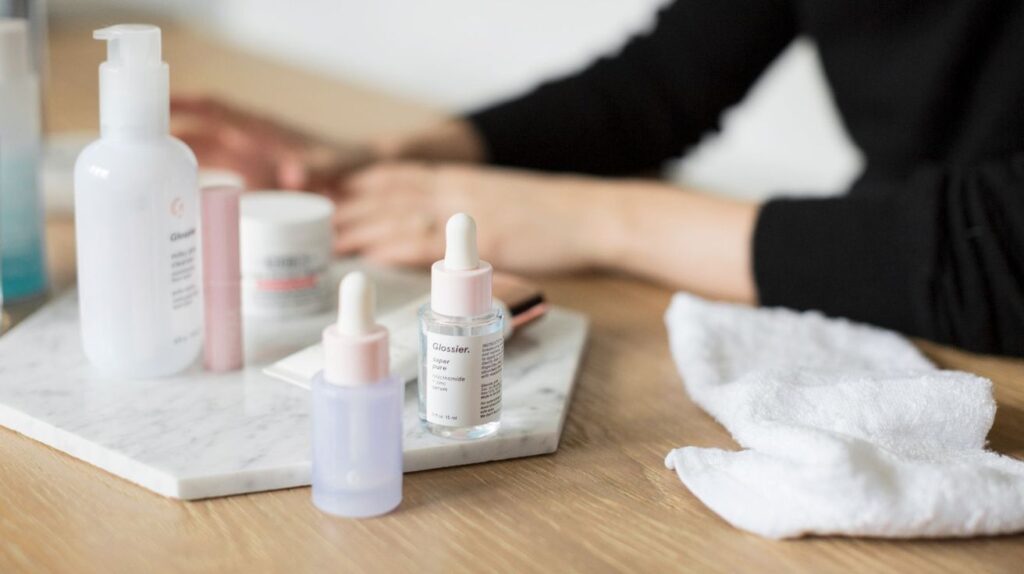
The 5 Core Steps Every Beginner Needs
A daily skincare routine for beginners step by step does not need to be complicated. Five steps — used consistently — will do more for your skin than ten products used randomly.
Step 1 — Cleanser: Start With a Clean Slate
Use: Morning and night
Cleansing removes overnight oil, environmental pollutants, sweat, and makeup. Without it, everything else you apply sits on top of a dirty surface and cannot absorb properly.
Choose a gentle, pH-balanced cleanser that does not leave your face feeling tight or stripped. For oily skin, a gel or foaming cleanser works well. For dry or sensitive skin, go for a cream or oil-based formula.
Key ingredients to look for: Ceramides, glycerin, hyaluronic acid.
Avoid: Sulfates (SLS/SLES) if your skin is sensitive.
Massage with lukewarm water for 60 seconds. Rinse thoroughly. Pat — do not rub — dry with a clean towel.
Step 2 — Toner: Optional, But Worth It
Use: After cleansing, before serum
Toners are not the astringent, alcohol-heavy products they used to be. Modern toners help balance your skin’s pH after cleansing and prep it to absorb the next steps better.
If you have oily or acne-prone skin, a toner with niacinamide or salicylic acid can help control shine and clear congestion. If your skin is dry, look for a hydrating toner with rose water, glycerin, or aloe vera.
If your cleanser is already doing a good job and your skin feels comfortable after washing, you can skip this step entirely.
Step 3 — Serum: Target Your Specific Concern
Use: Morning or night, depending on the serum
Serums are concentrated formulas that address specific skin concerns — dark spots, dullness, fine lines, dehydration. As a beginner, start with just one serum and introduce it slowly.
The two most beginner-friendly serums are:
- Vitamin C serum — brightens skin, fades dark spots, protects against free radical damage. Use in the morning.
- Hyaluronic acid serum — pulls moisture into the skin and plumps it up. Use morning or night on damp skin.
Apply a few drops to your fingertips and press gently into the skin — do not rub.
Step 4 — Moisturizer: Lock In Hydration
Use: Morning and night
This step is non-negotiable for every skin type, including oily skin. When you skip moisturizer, your skin overproduces oil to compensate — which makes breakouts worse, not better.
In the morning, a lightweight gel moisturizer works well for most skin types. At night, you can use something slightly richer to support your skin’s overnight repair process.
Key ingredients: Ceramides, niacinamide, peptides, shea butter (for dry skin).
Apply on slightly damp skin after your serum has absorbed.
Step 5 — Sunscreen: The One Step You Cannot Skip
Use: Every single morning, rain or shine
UV damage is responsible for up to 80% of visible skin aging. It also worsens dark spots and hyperpigmentation — a major concern for darker skin tones. No serum, no cream, and no treatment can undo ongoing sun damage.
Use a broad-spectrum SPF 30 or higher every morning as the last step of your morning routine. Apply a generous amount — about a teaspoon for the face and neck.
For oily skin: look for a matte, lightweight sunscreen.
For dry skin: a hydrating SPF with moisturizing ingredients works well.
For sensitive skin: mineral sunscreens with zinc oxide are gentler.
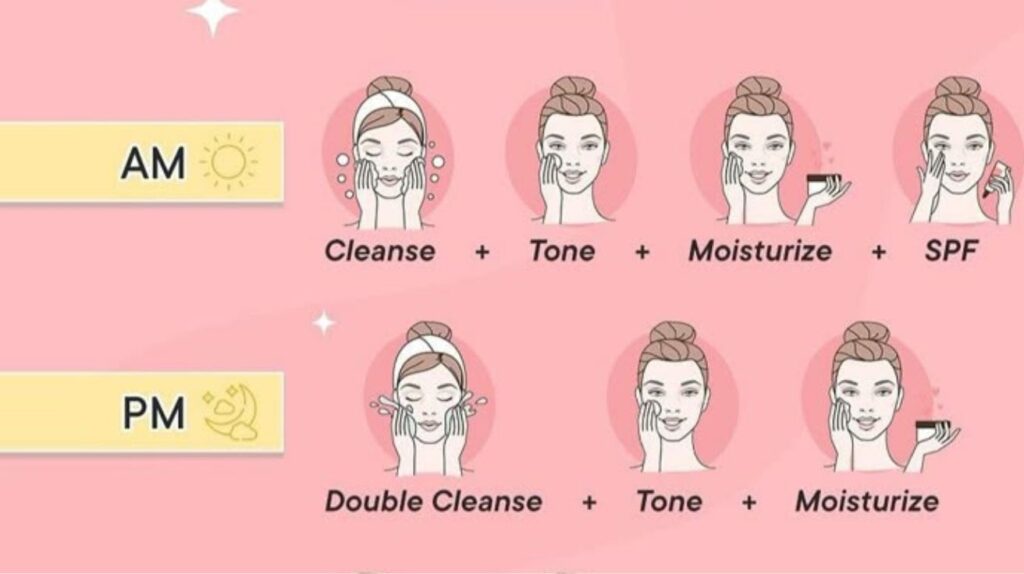
Morning vs Night Routine — What Changes
Your morning and evening routines serve completely different purposes.
Morning routine goal: Protect. You are layering products to shield your skin from UV rays, pollution, and free radicals throughout the day.
Order: Cleanser → Toner → Vitamin C Serum → Moisturizer → Sunscreen
Evening routine goal: Repair. While you sleep, your skin goes into regeneration mode — cell turnover increases, and products absorb more deeply.
Order: Makeup remover (if needed) → Cleanser → Toner → Repair serum (retinol, peptides, hyaluronic acid) → Night moisturizer
Important: Never apply retinol or exfoliating acids in the morning without SPF — they make your skin significantly more sensitive to UV damage.
Ingredients to Know — and What Not to Mix
Once you have your basics sorted, you will start exploring more active ingredients. Here is a quick cheat sheet:
Ingredients that work well together:
- Hyaluronic acid + Niacinamide + SPF (daytime stack)
- Retinol + Peptides (nighttime repair)
- Vitamin C + Vitamin E (antioxidant boost)
Combinations to avoid:
- Vitamin C + Retinol — both are powerful actives. Use one in the morning, one at night.
- Niacinamide + Direct Acids (AHA/BHA) — can cause skin flushing. Use at different times.
- Retinol + AHA/BHA — too irritating for most skin types, especially beginners.
Start with one active at a time. Wait two to three weeks before adding another. This is the only reliable way to know what is helping and what is causing a reaction.
5 Mistakes Beginners Commonly Make
1. Using too many products at once
Adding five new products the same week makes it impossible to know which one is helping — or causing that breakout. One product at a time, two weeks apart.
2. Skipping sunscreen indoors
UVA rays penetrate glass. If you sit near a window, you are getting UV exposure even on cloudy days.
3. Over-cleansing
Washing your face more than twice a day strips your skin barrier. A damaged skin barrier leads to more oiliness, sensitivity, and breakouts — the opposite of what you want.
4. Expecting results in three days
Your skin’s natural renewal cycle takes 28 to 40 days. Give any new routine or product at least six weeks before deciding if it works.
5. Applying products in the wrong order
A simple rule: go from thinnest to thickest consistency. Water-based products first, oils and creams last, sunscreen always at the very end of your morning routine.
Frequently Asked Questions
Q: How long does a basic skincare routine take?
A well-structured morning routine takes 5 to 8 minutes. Your evening routine can take slightly longer if you include double cleansing or a mask. There is no need to spend 30 minutes — consistency beats complexity.
Q: Can beginners use retinol?
Yes, but start slow. Begin with a low concentration (0.025% to 0.05%) two nights per week, and always apply a moisturizer afterward. Expect some dryness or peeling in the first two weeks — that is normal.
Q: What is the correct order for skincare products?
Cleanser → Toner → Serum → Eye cream (optional) → Moisturizer → Sunscreen (morning only). At night, replace sunscreen with a night cream or targeted treatment.
Q: Do I need a toner as a beginner?
Not necessarily. Toners are helpful but not essential. If your skin feels balanced after cleansing, skip it and invest that money in a good serum instead.
Q: How do I know if a product is breaking me out?
Stop using all new products. Wait two weeks for your skin to calm down. Then reintroduce one product at a time, every two weeks. The one that triggers breakouts is your culprit.
Q: Is sunscreen really necessary on cloudy days?
Yes. Up to 80% of UV rays pass through clouds. Broad-spectrum SPF is a daily habit, not a summer-only one.
Final Thought
Skincare does not need to be expensive or complicated to work. A daily skincare routine for beginners step by step comes down to five things: cleanse, tone, treat, moisturize, and protect. Get those right, stay consistent, and your skin will respond.
The biggest mistake people make is chasing trends instead of building habits. Start with the basics, learn what your skin responds to, and add products slowly. Six weeks from now, the difference will be visible — and it will be because you kept it simple.